お雛さま Hina dolls
紙粘土 色紙 千代紙
Paper clay Coloured paper Chiyogami
※絵をクリックすると拡大します。Click on the image to enlarge it.
※本ギャラリーはアートセラピー活動の記録として公開しています。作品の著作権は制作者に帰属します。
作品には当時の記録として実施者のサインが残されているものもあります。
※This gallery is published as a record of art therapy activities. The copyright of the works belongs to their creators. Some works bear the signature of the facilitator as a record of the time.
掲載している作品写真は、当時の活動記録としてすべて私自身が撮影したものです。
作品には一切手を加えず、すべて参加者自身の表現をそのまま記録しています。
All photographs of the works were taken by me at the time as part of the activity record.
No alterations were made to the works; each piece is presented exactly as created by the participant.
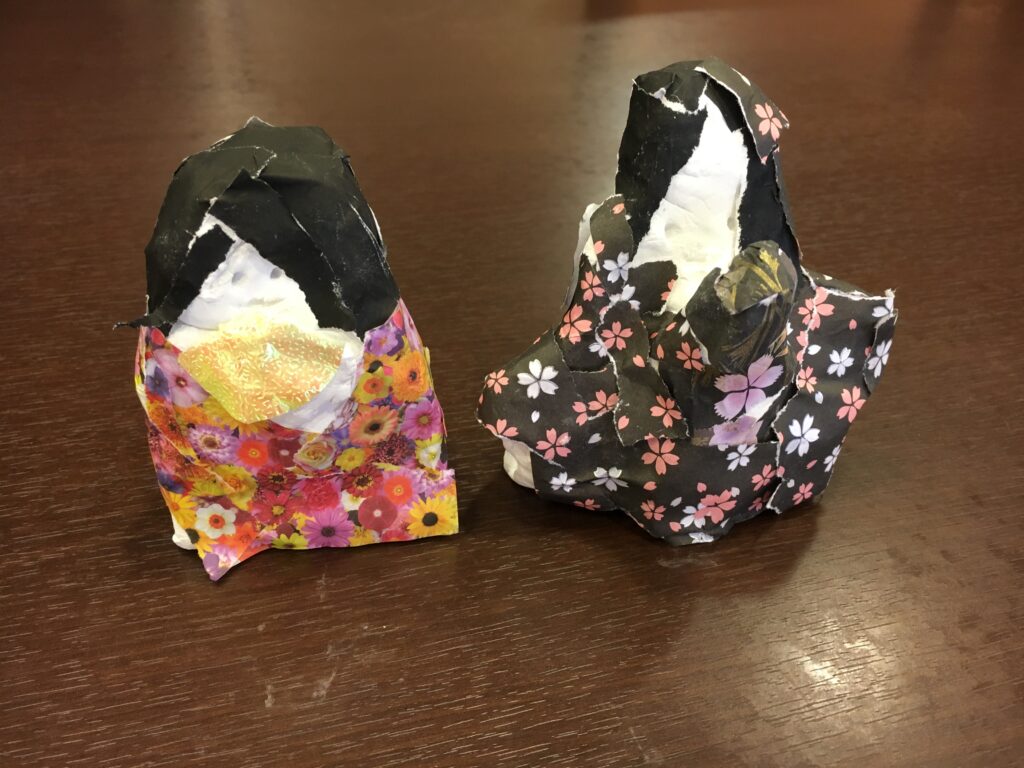
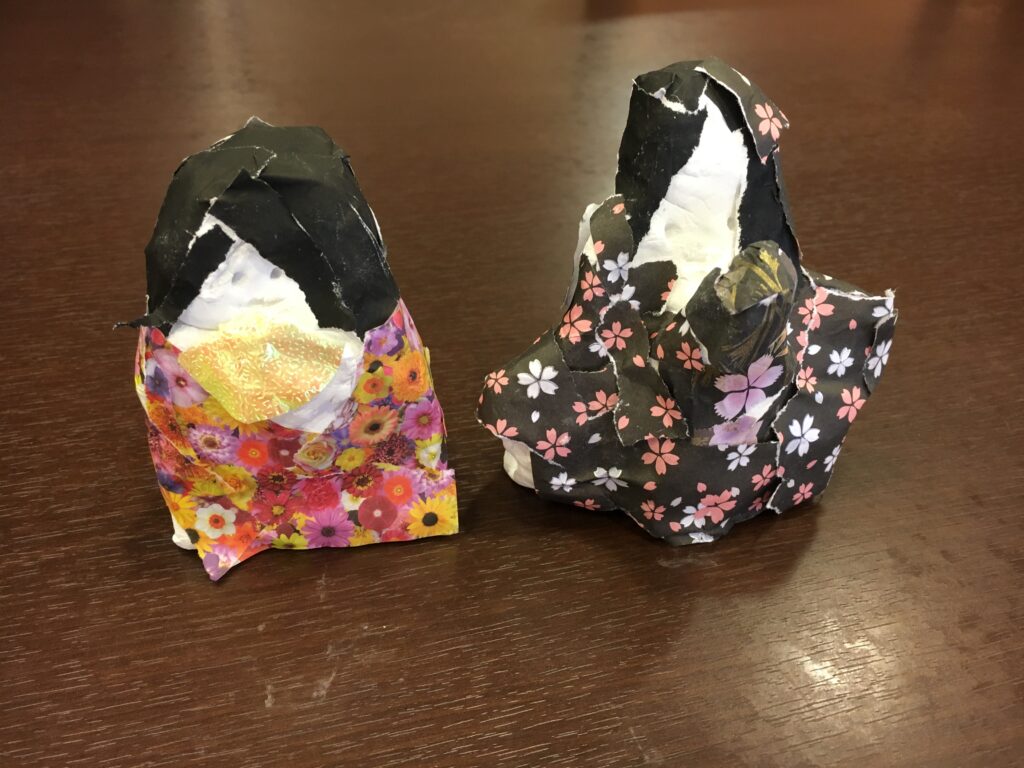
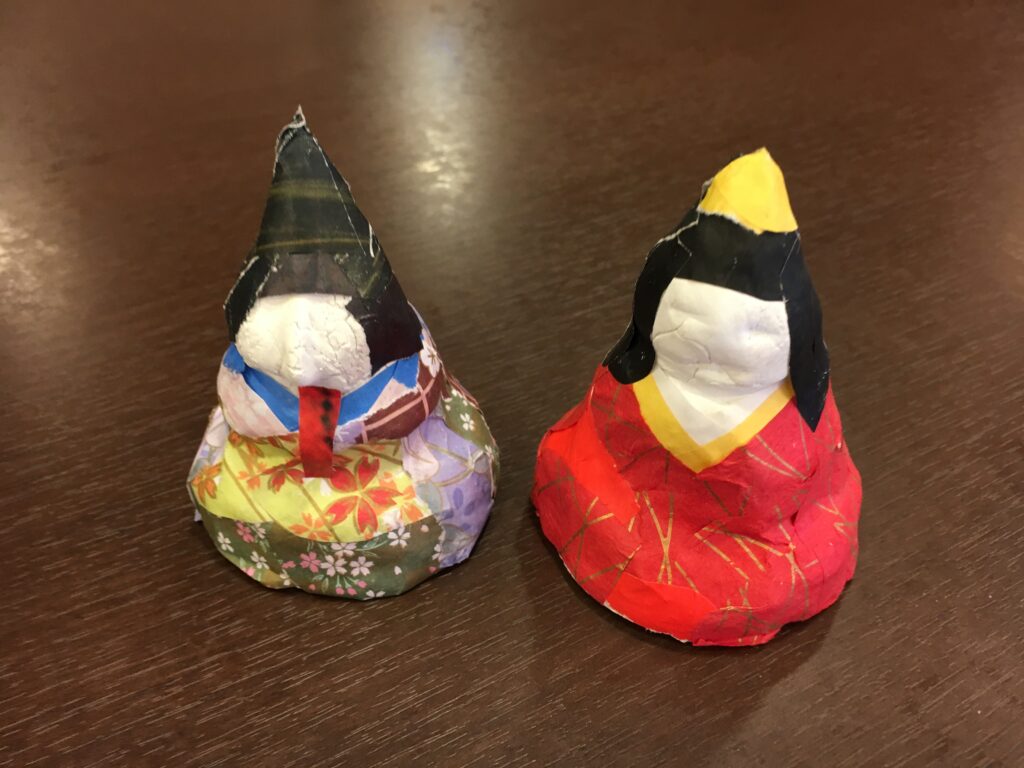
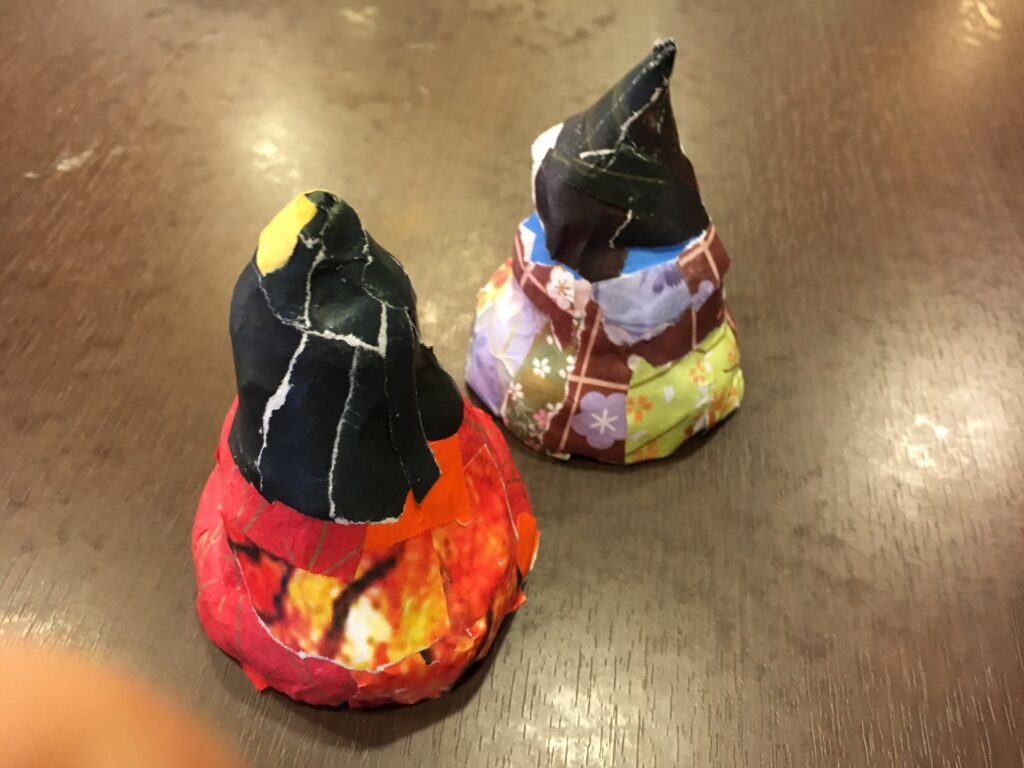
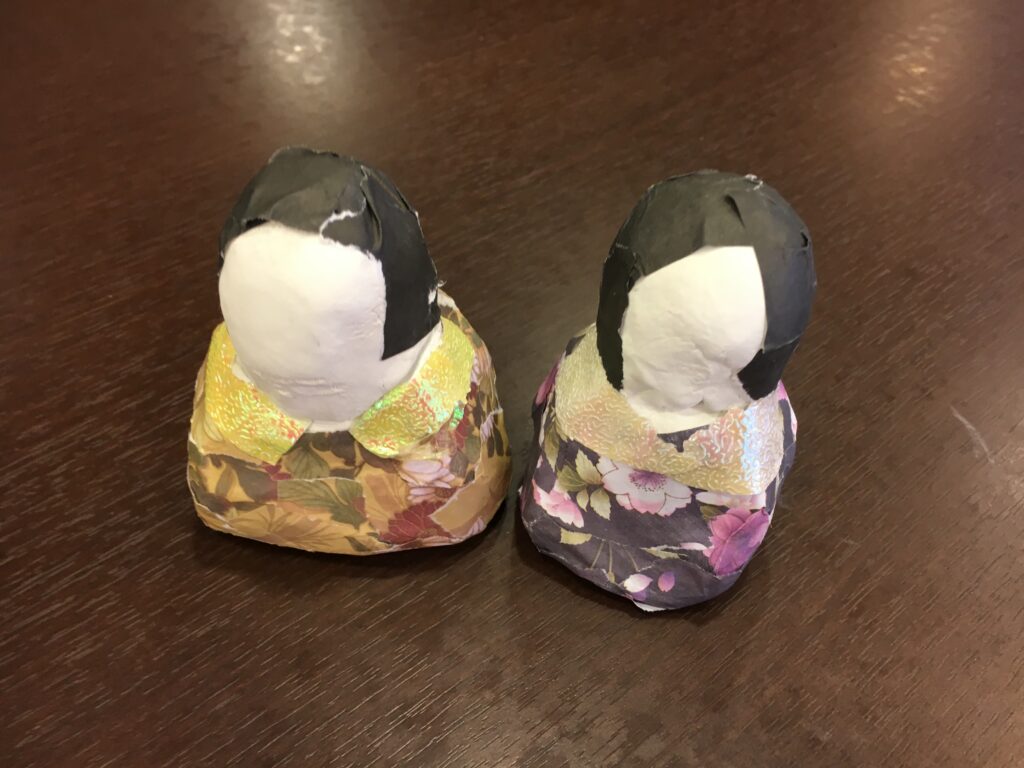
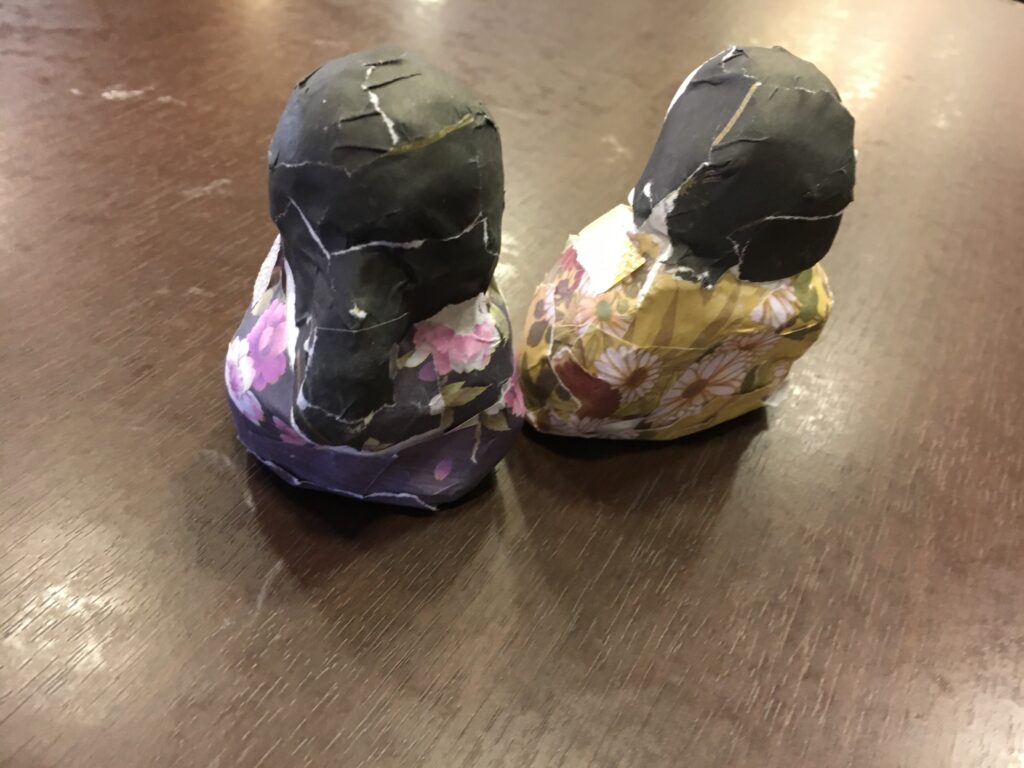
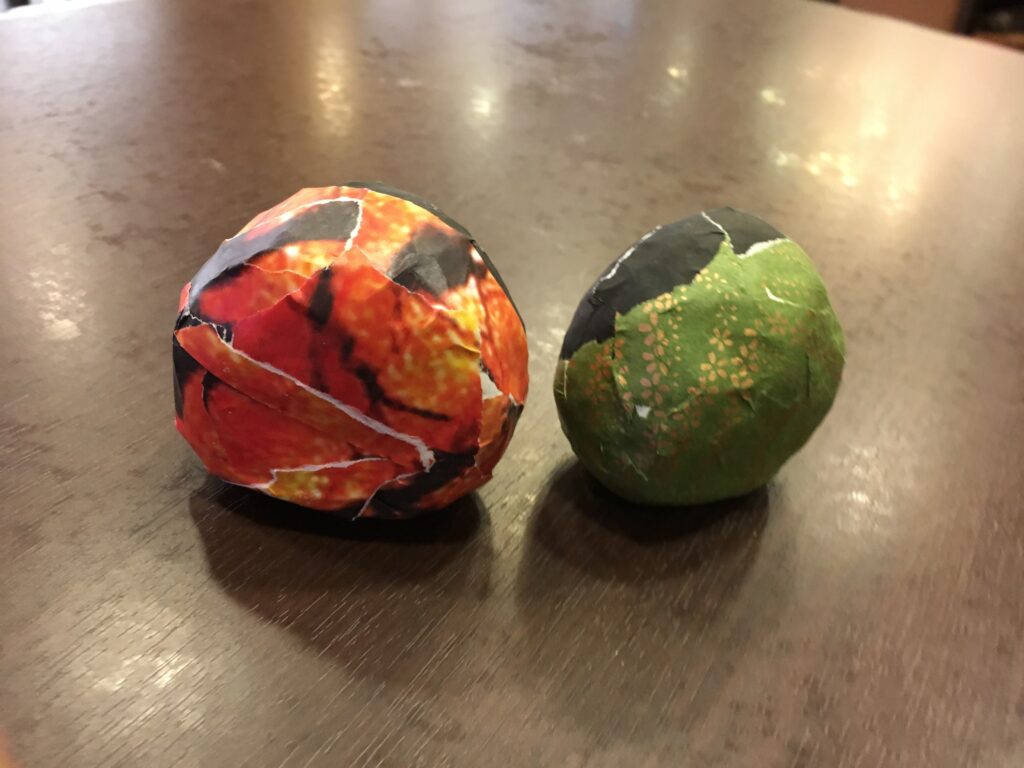
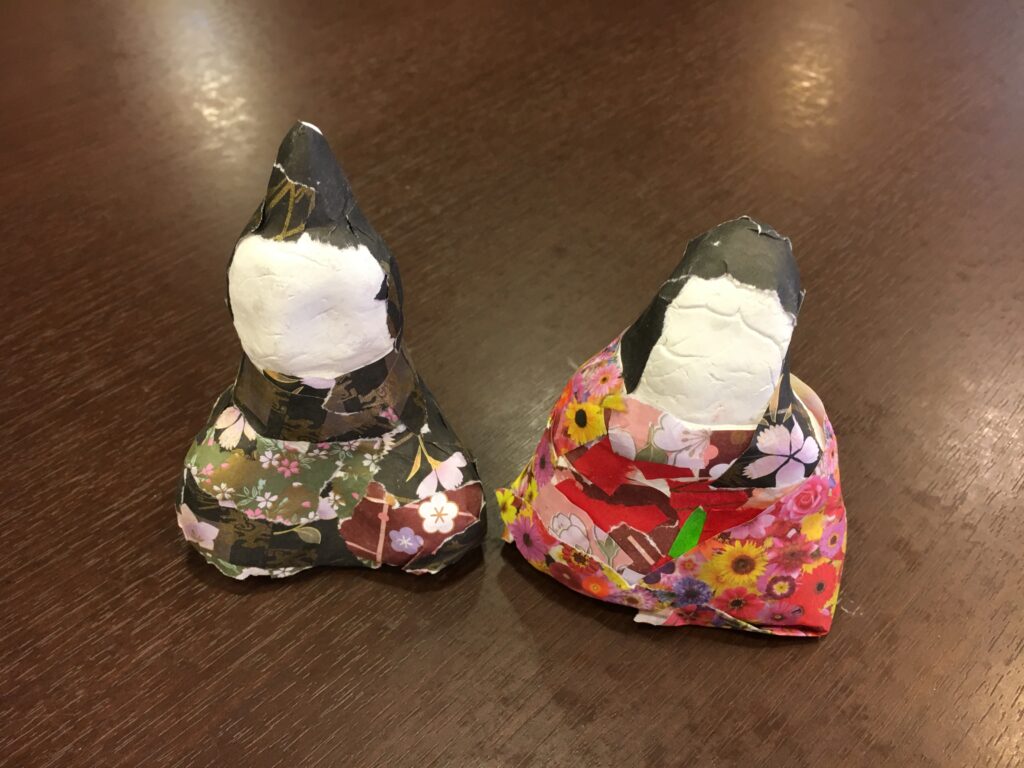
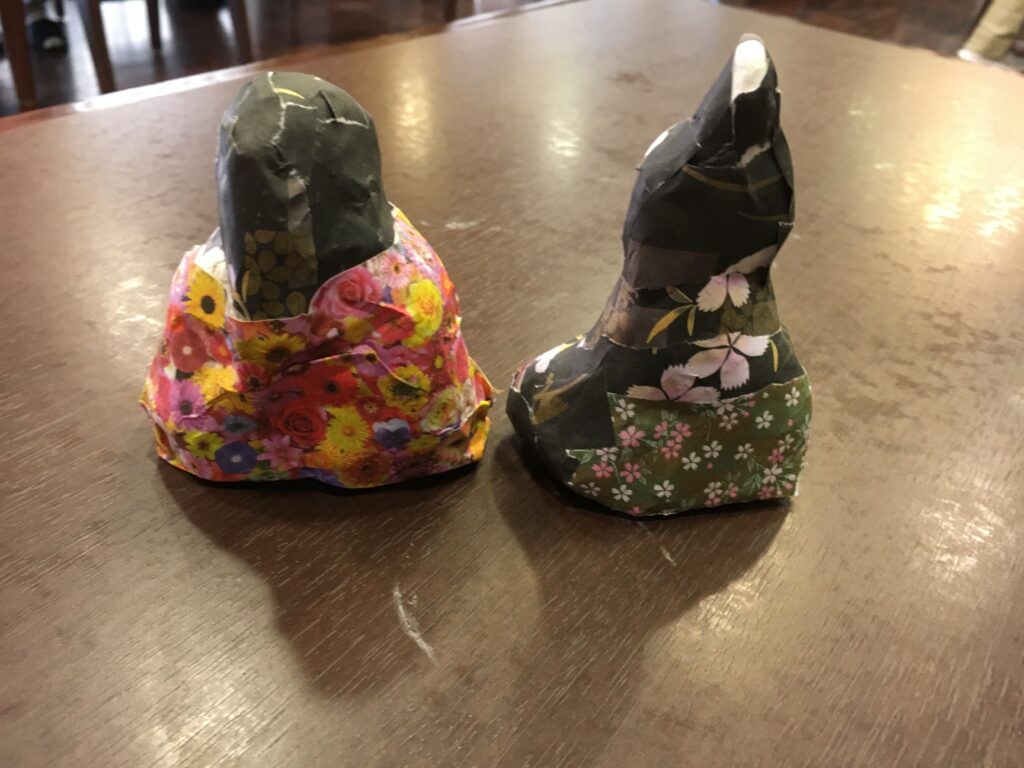
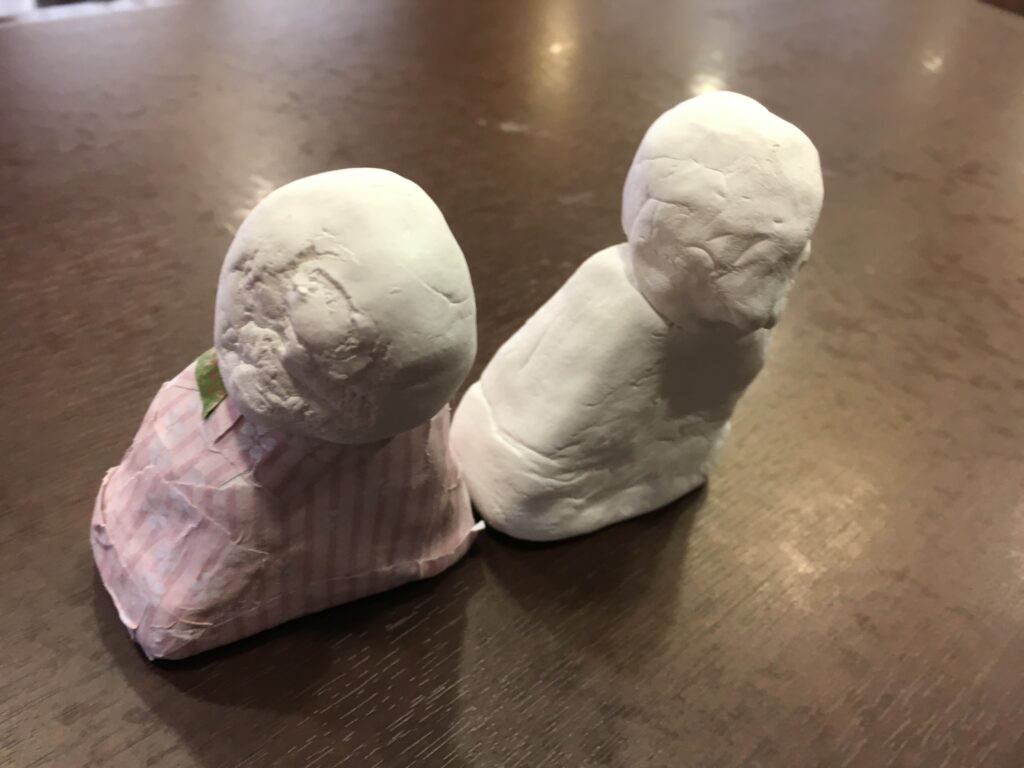
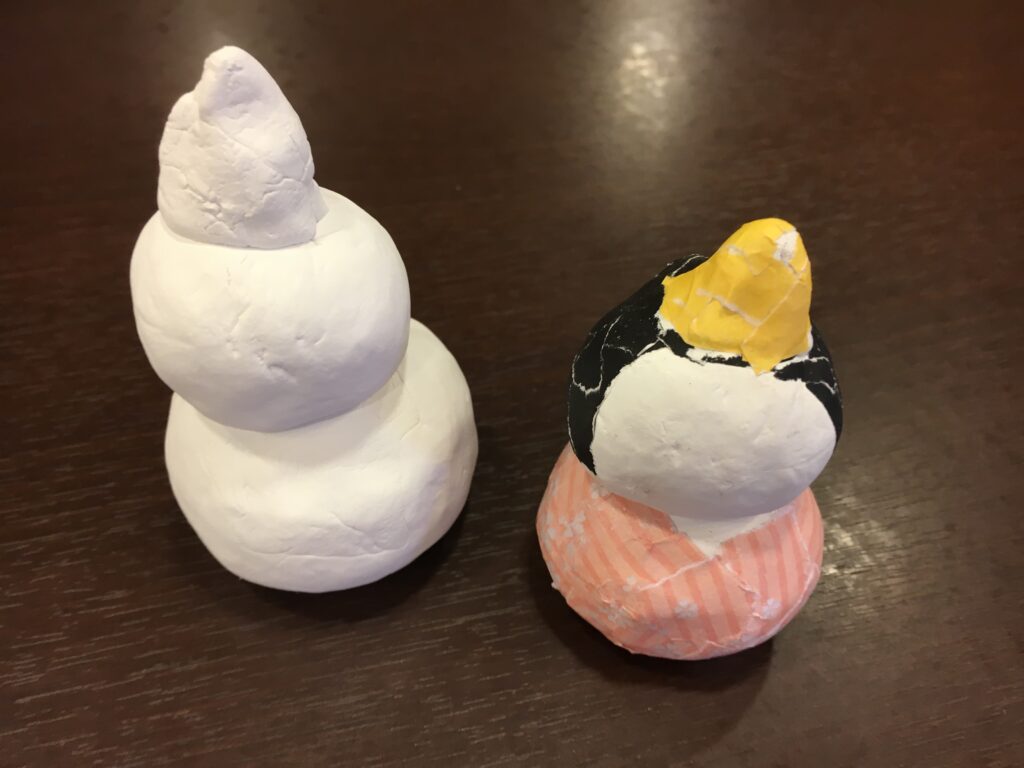
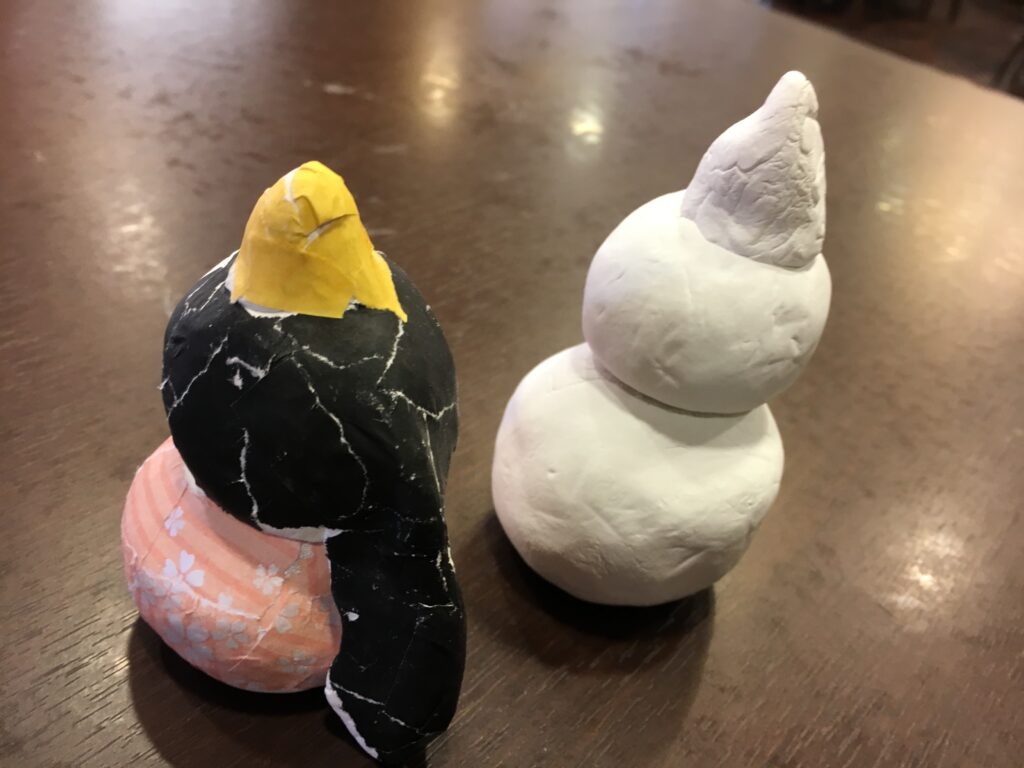
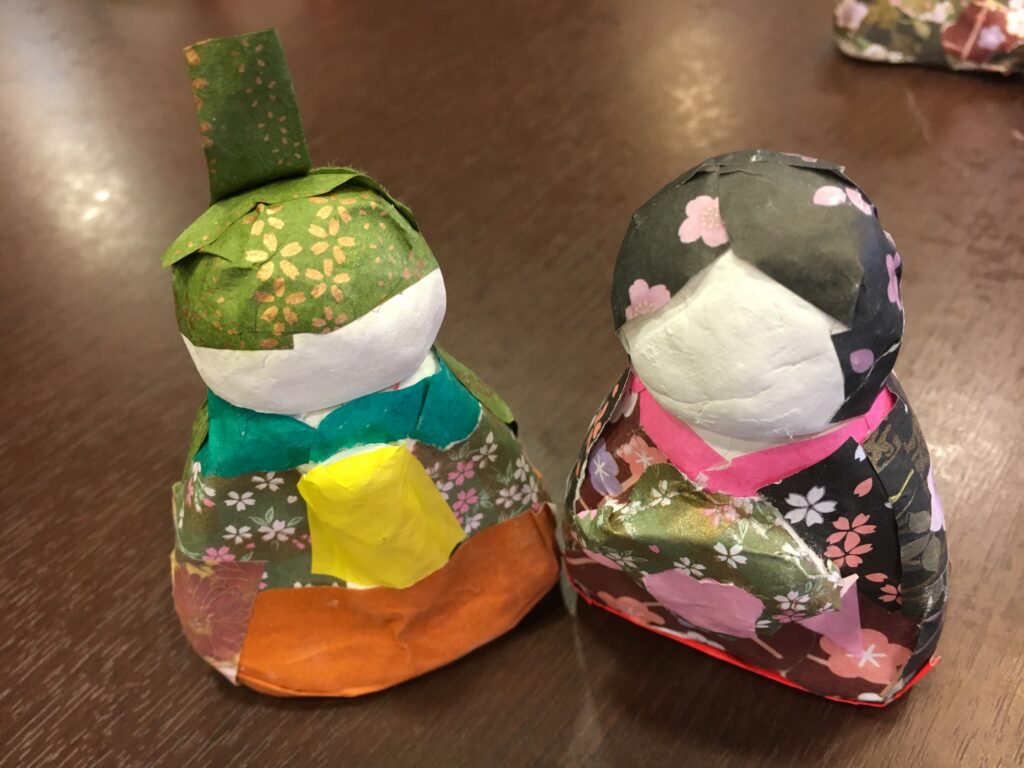
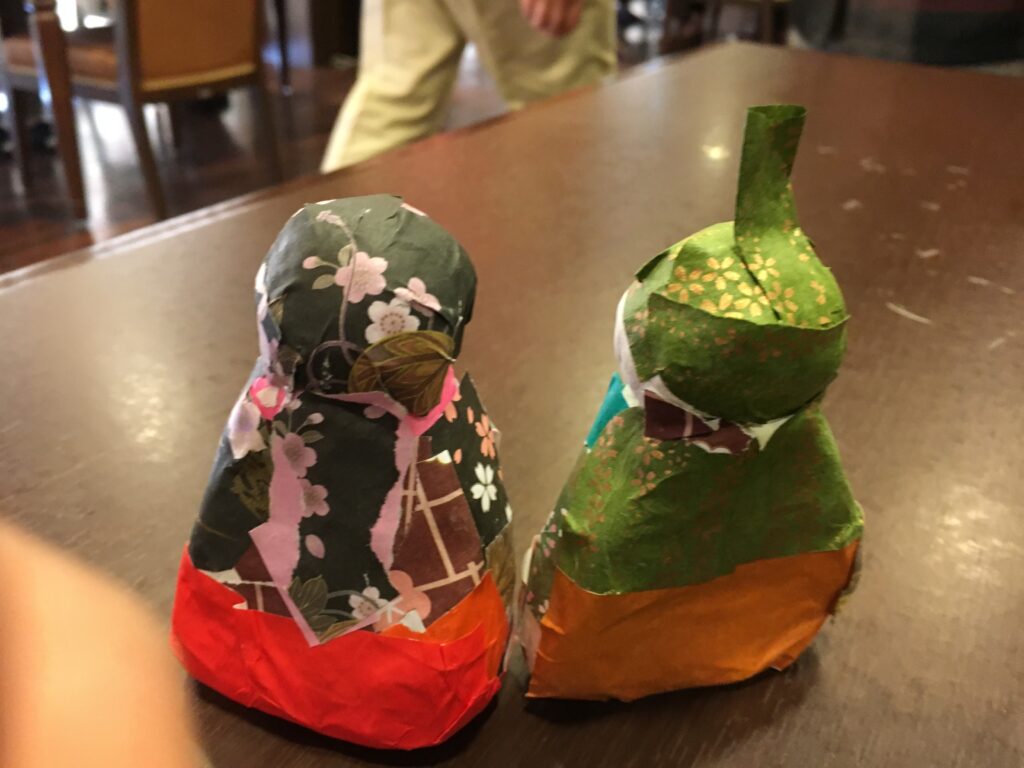
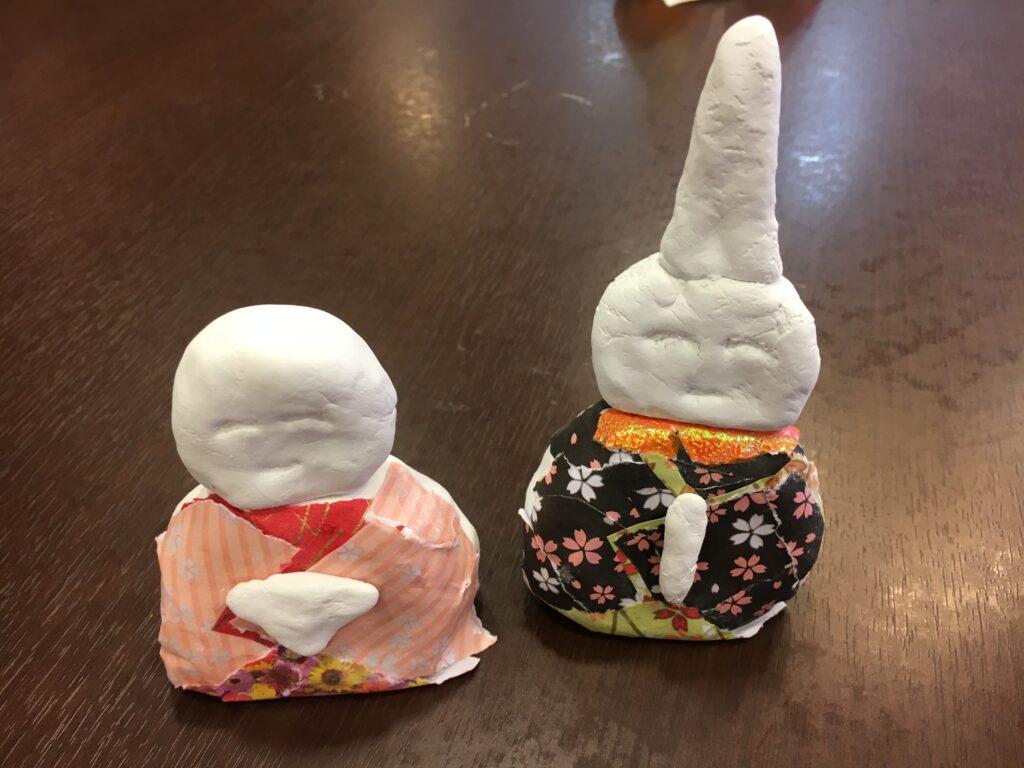
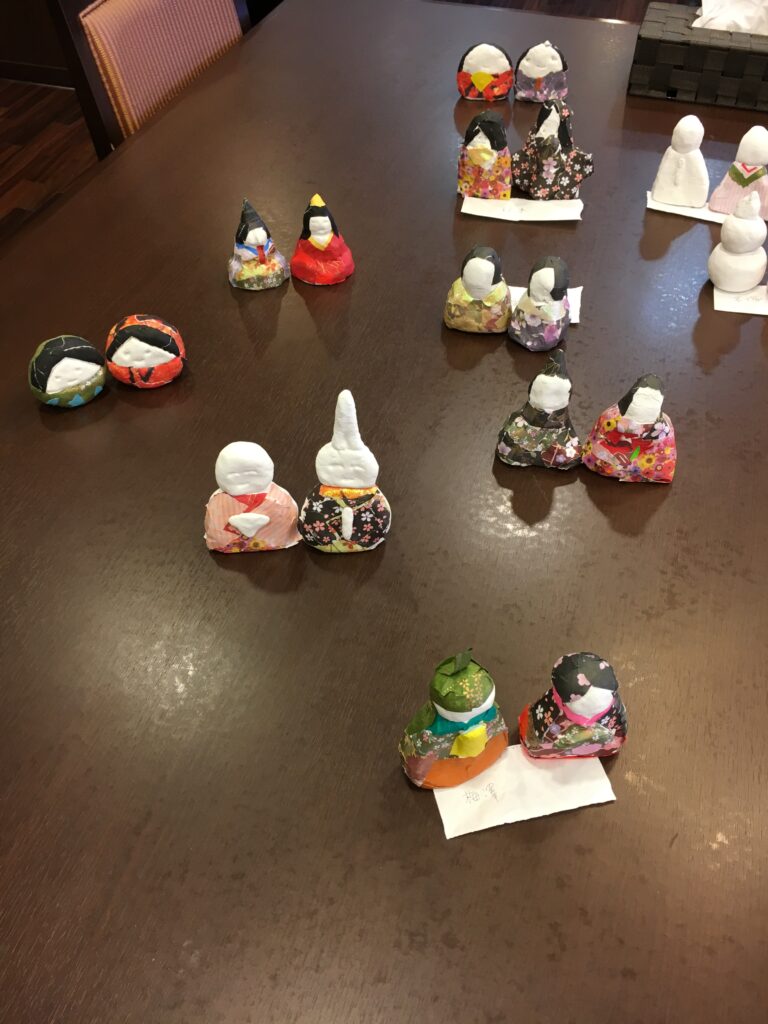
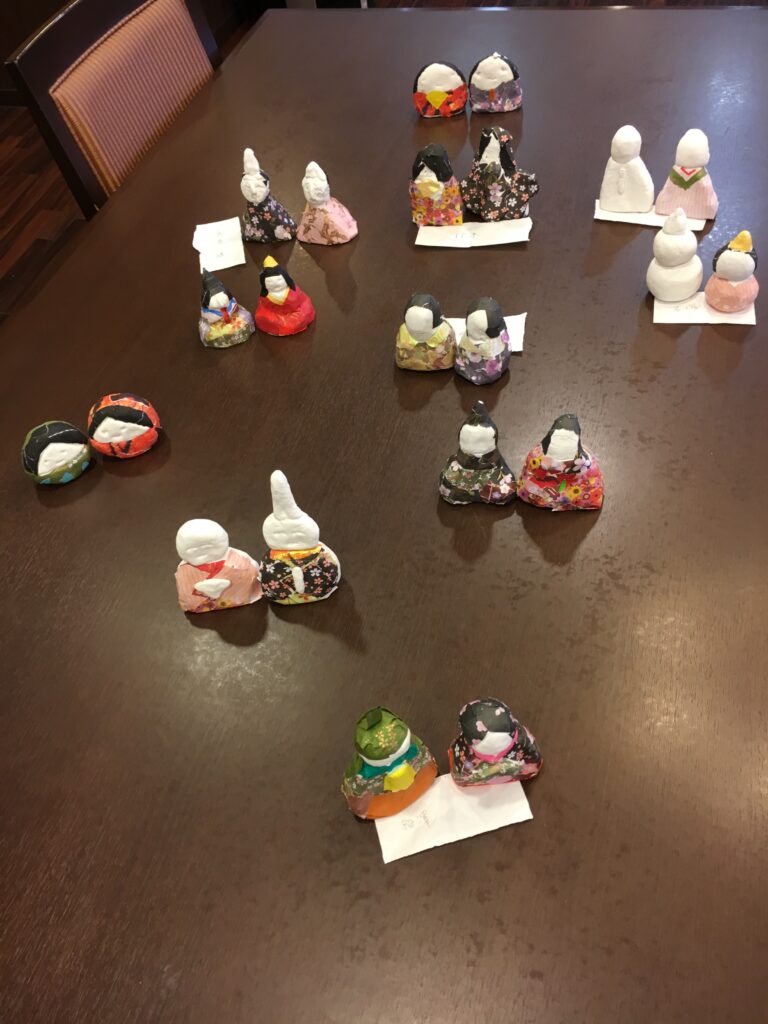
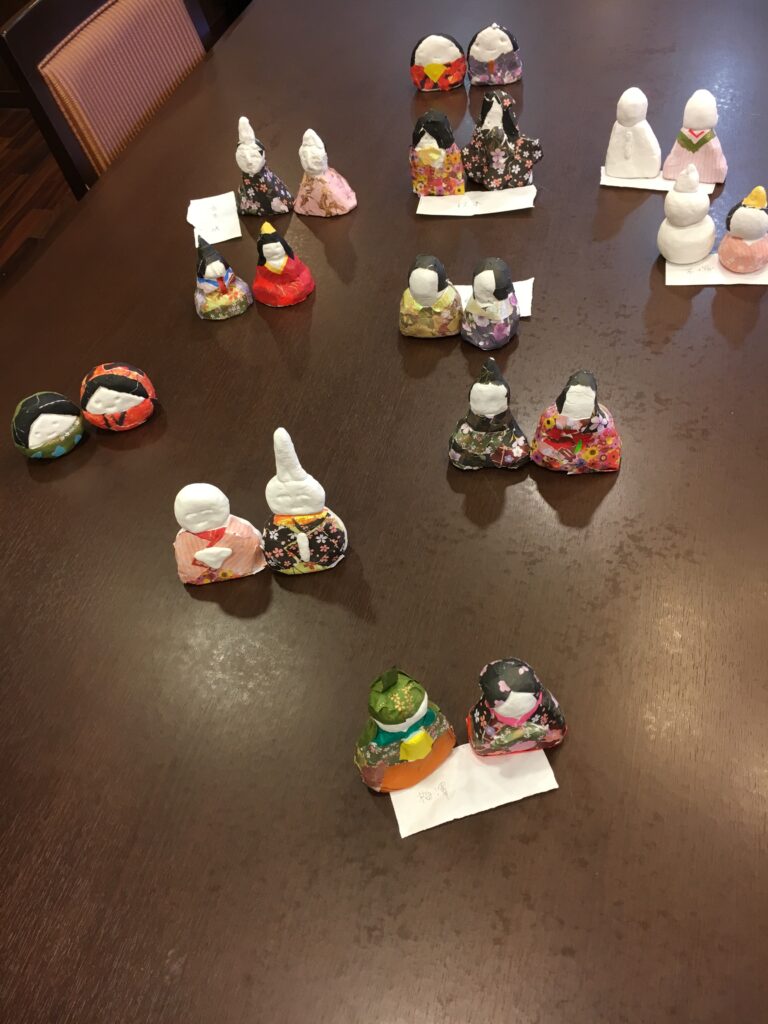
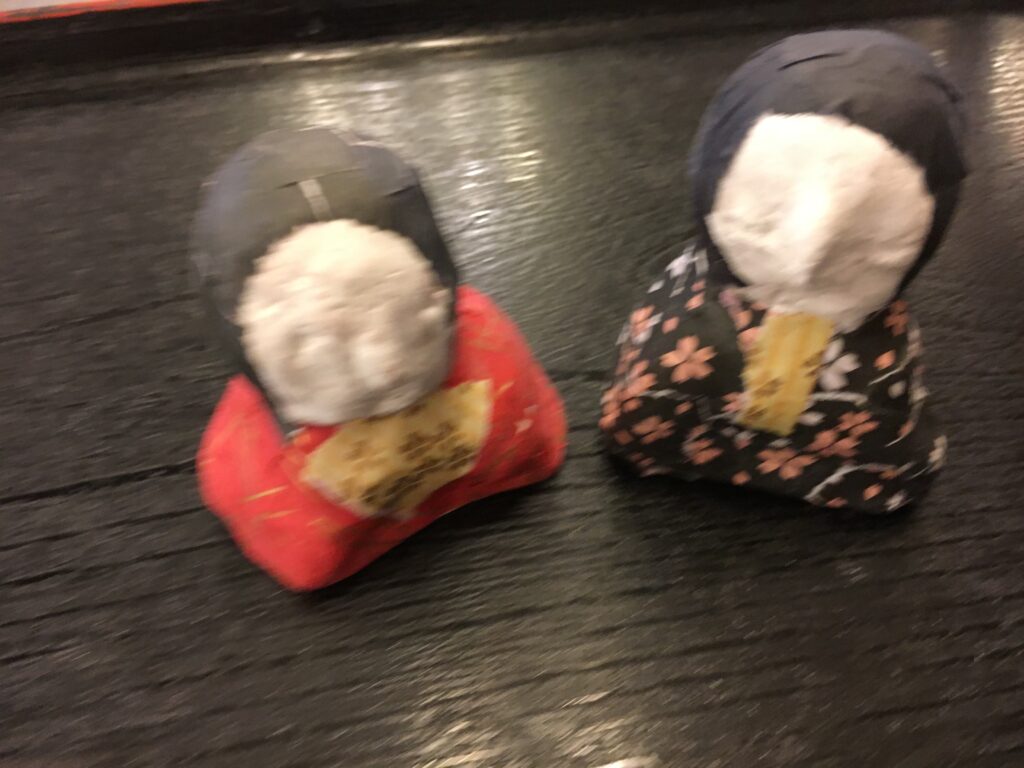
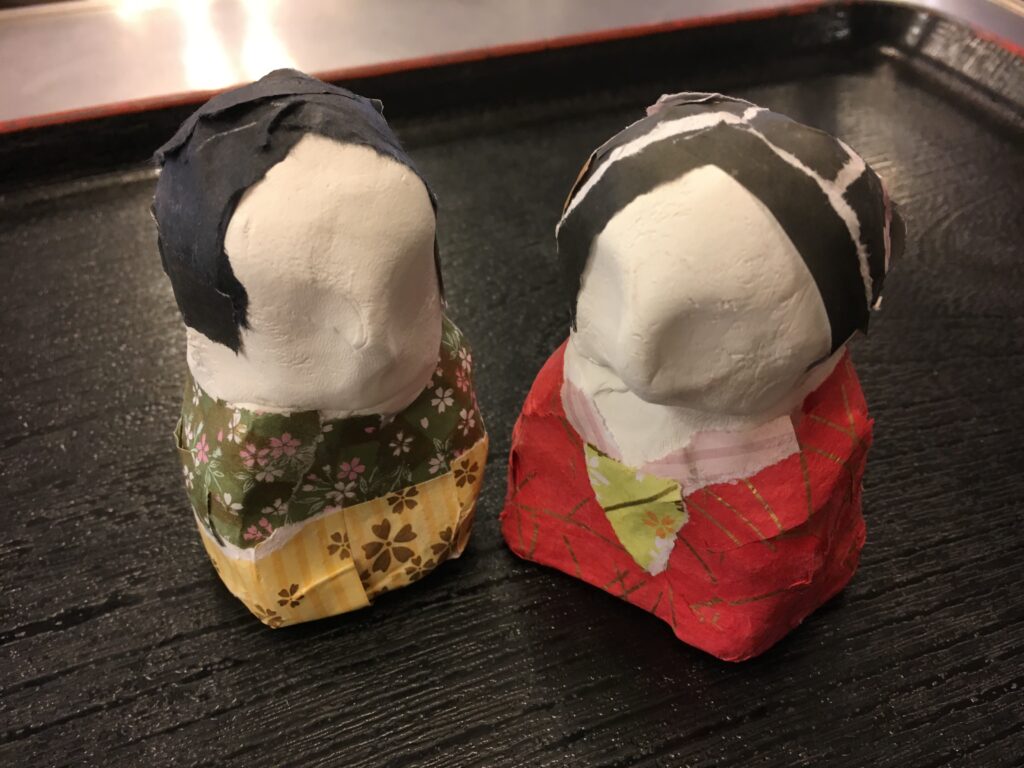
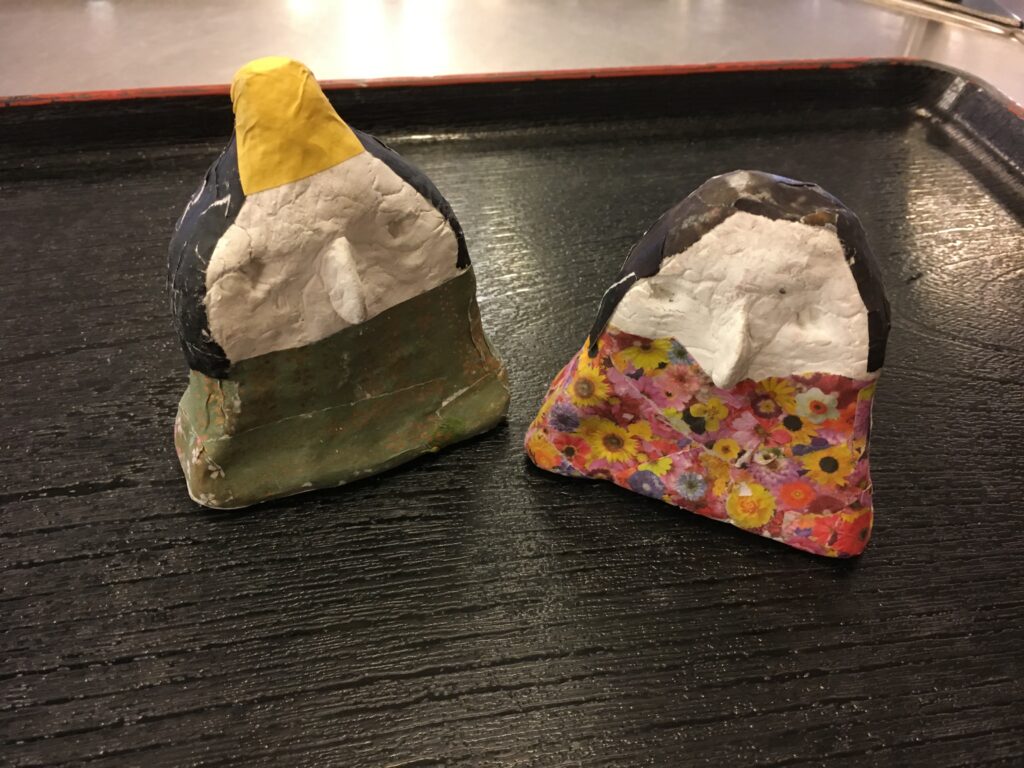
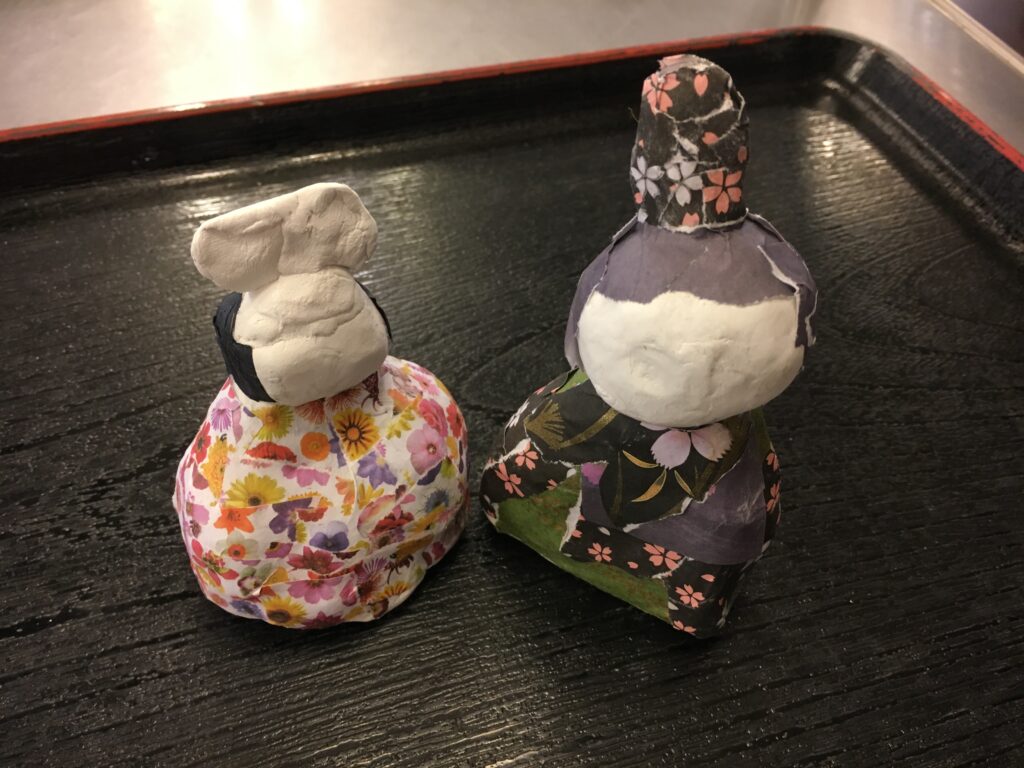
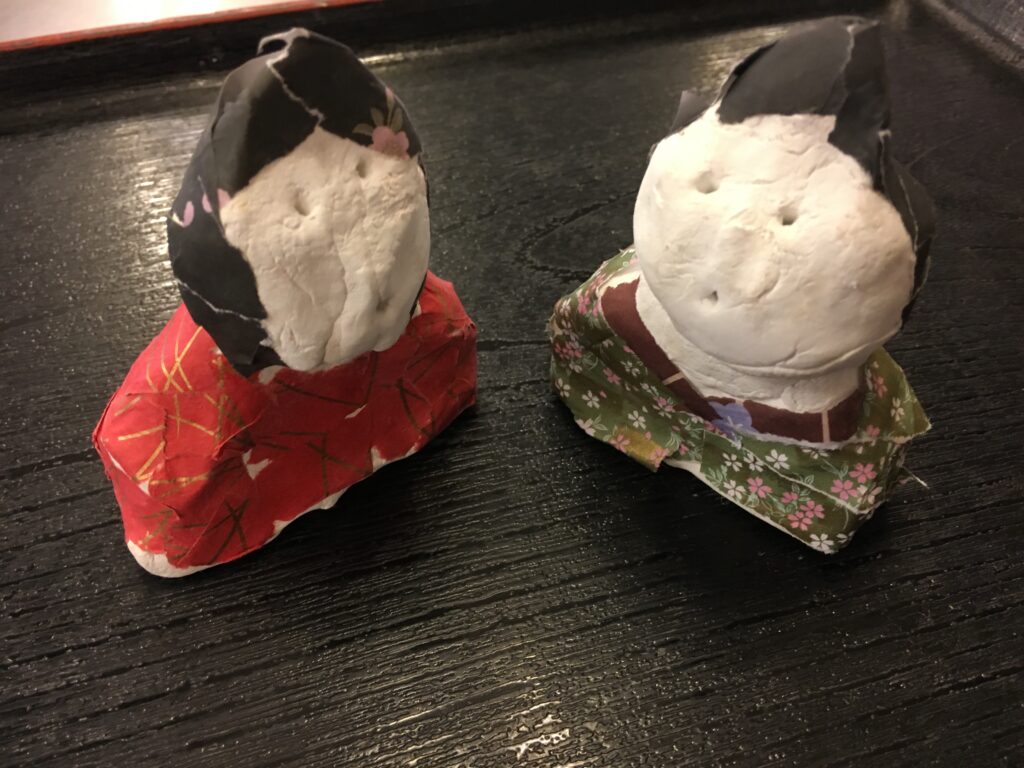
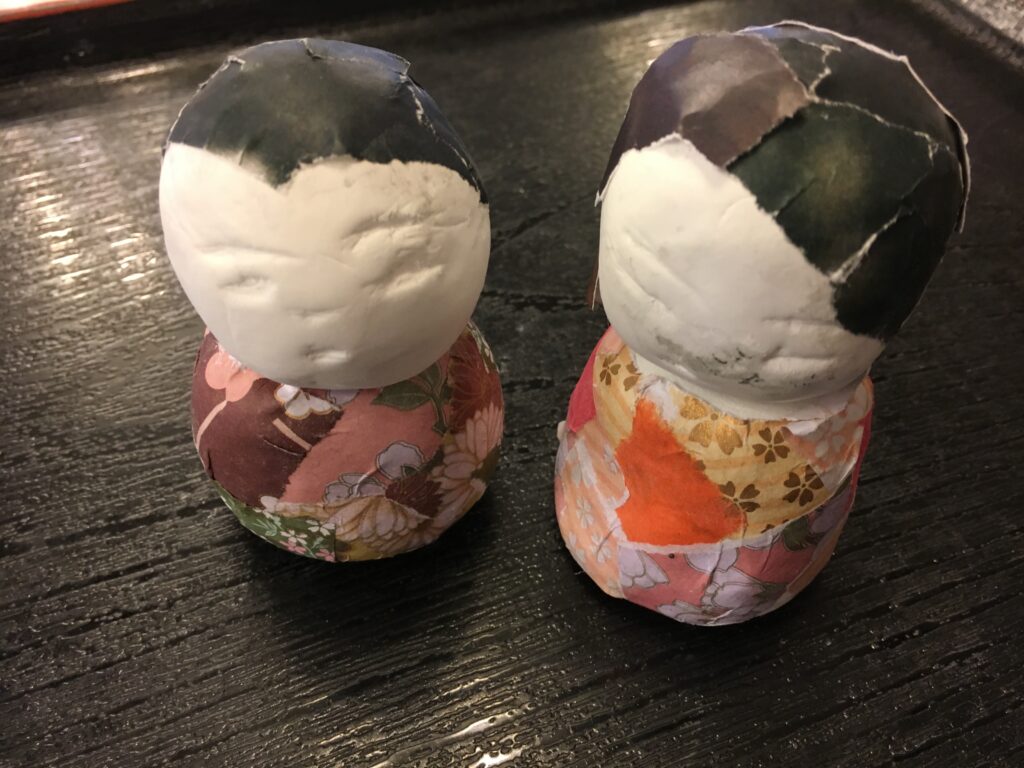
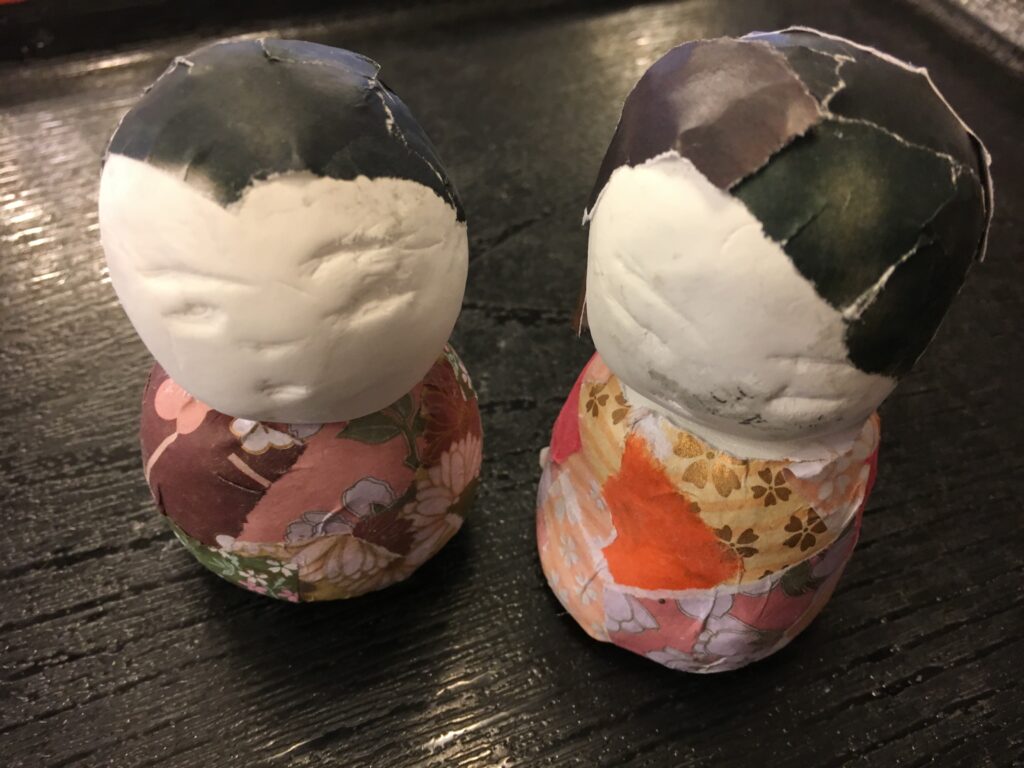
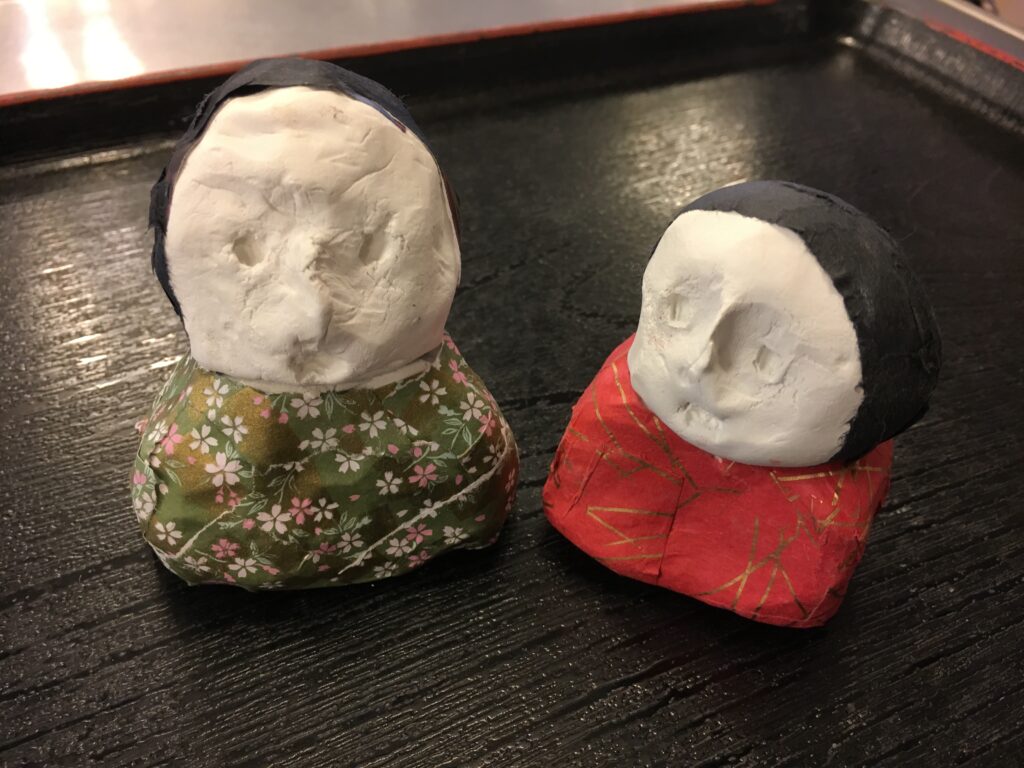
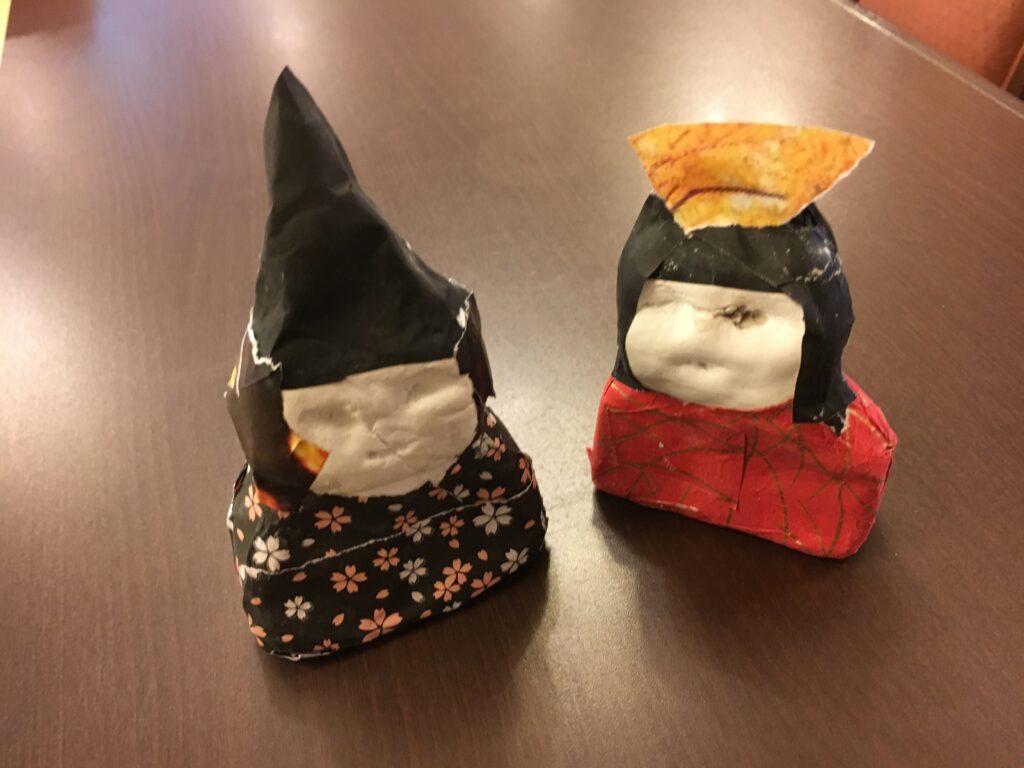
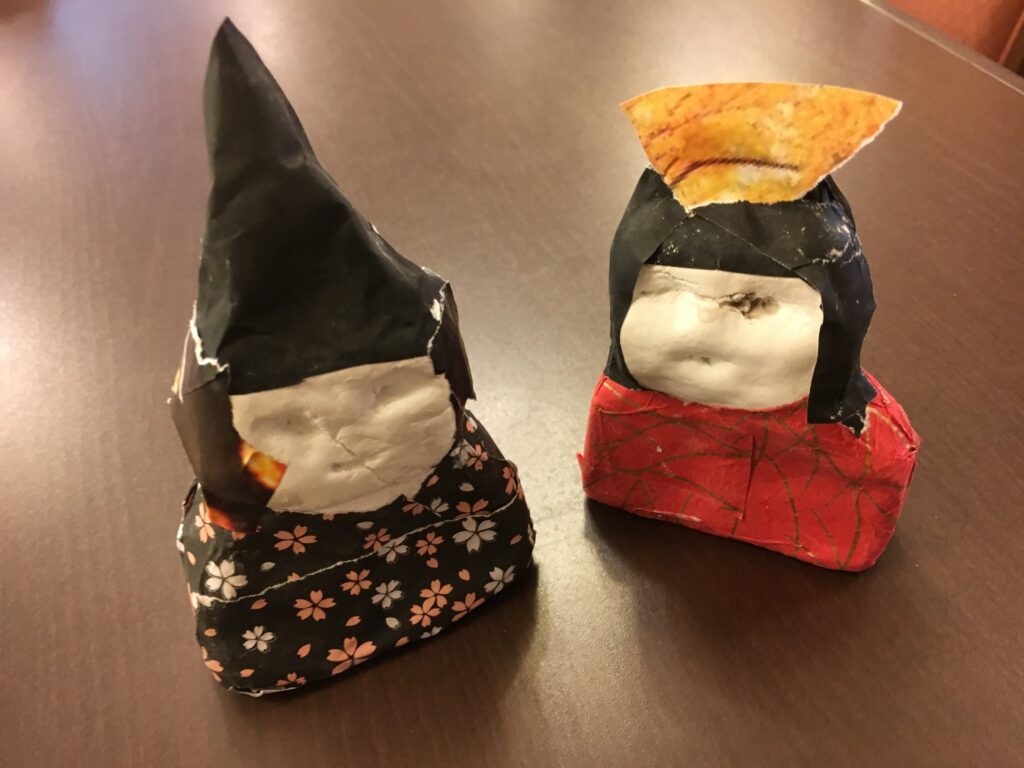
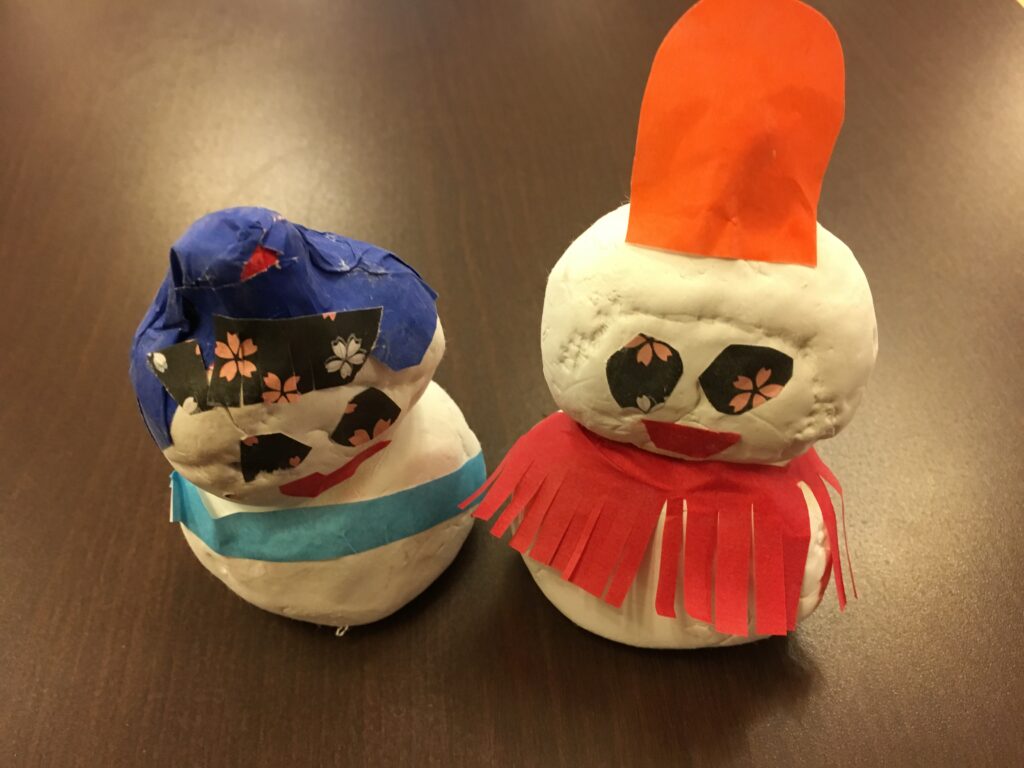
3月にはお雛様、それは定番の楽しい行事だ。3月3日のお雛様に間に合うように、ご自分で作ったお雛様が出来上がるように計画を組んだ。紙粘土で、私自身が試作し、難しそうなところを確認する。貼り絵で仕上げるので、紙を選ぶが、これは千代紙が良いだろう、華やかな模様だけではないが、選び方は個性による。
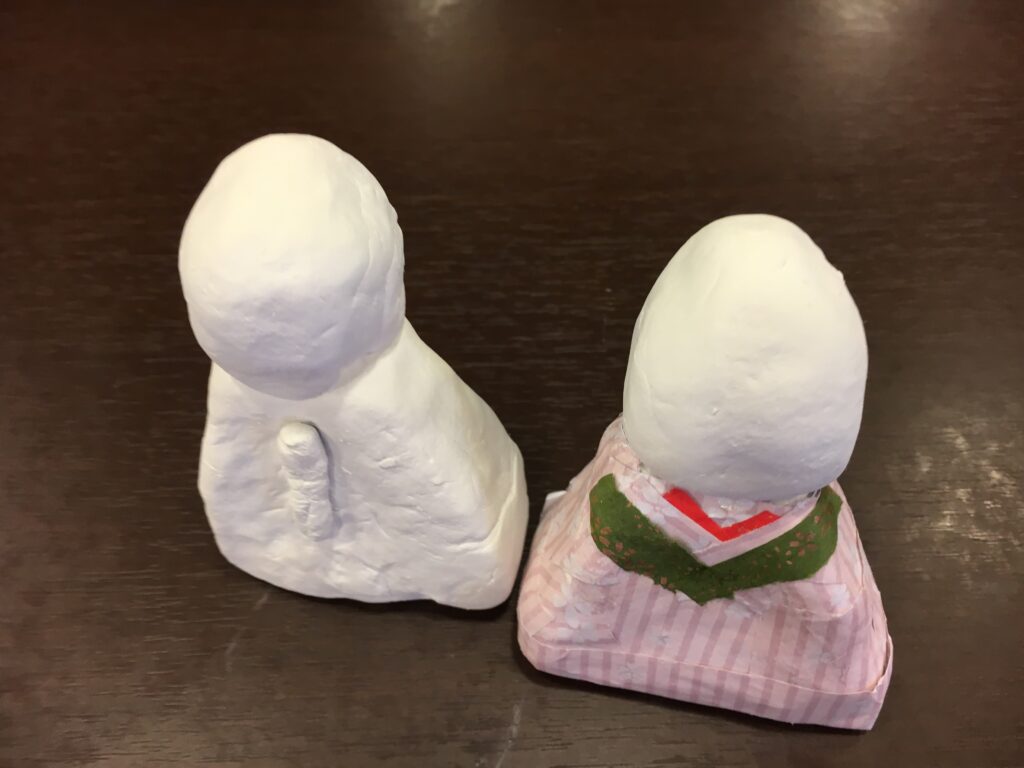
紙粘土が乾くのを待ってから、貼り絵をするので、2月の2回を制作時間に充てた。
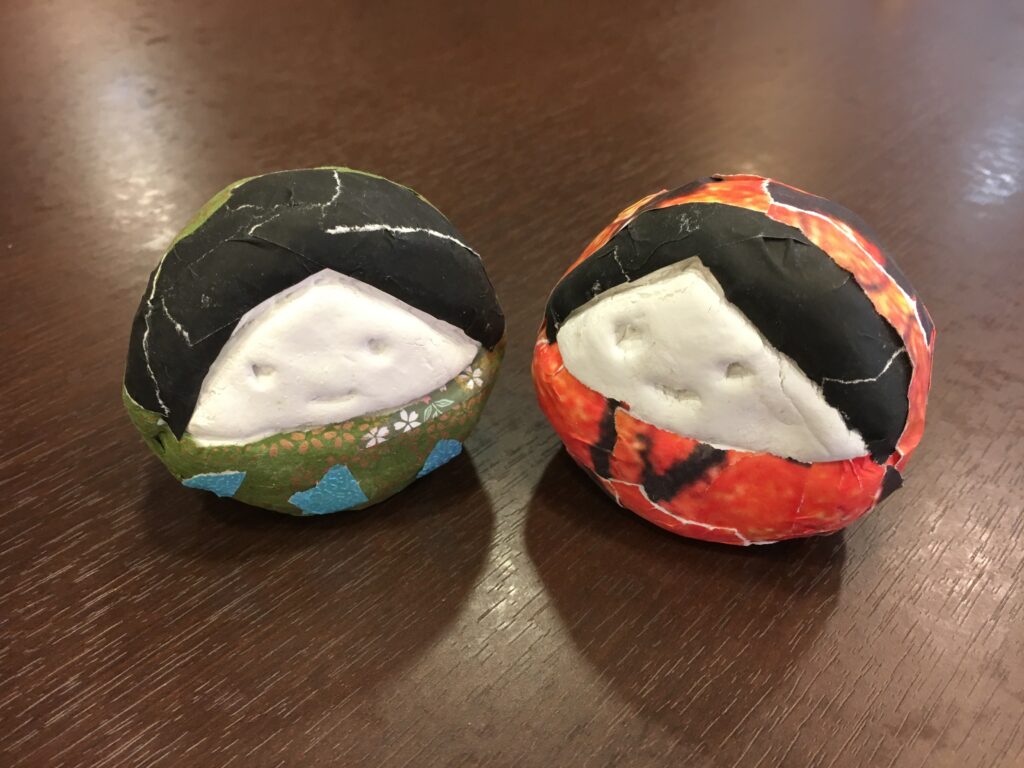
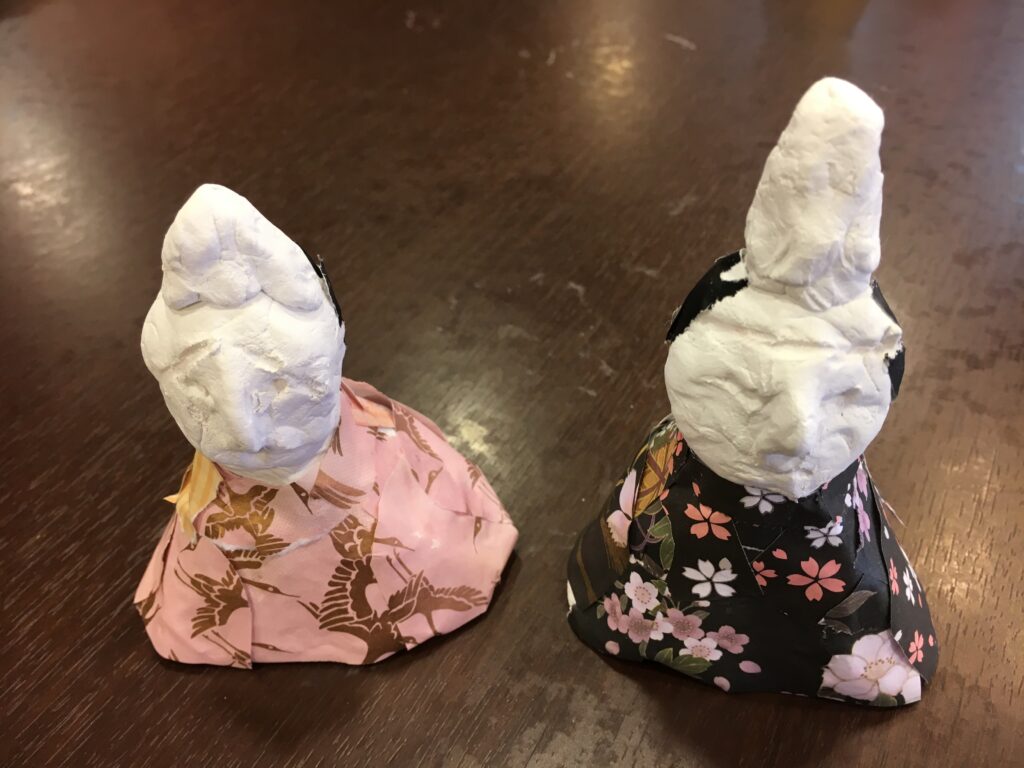
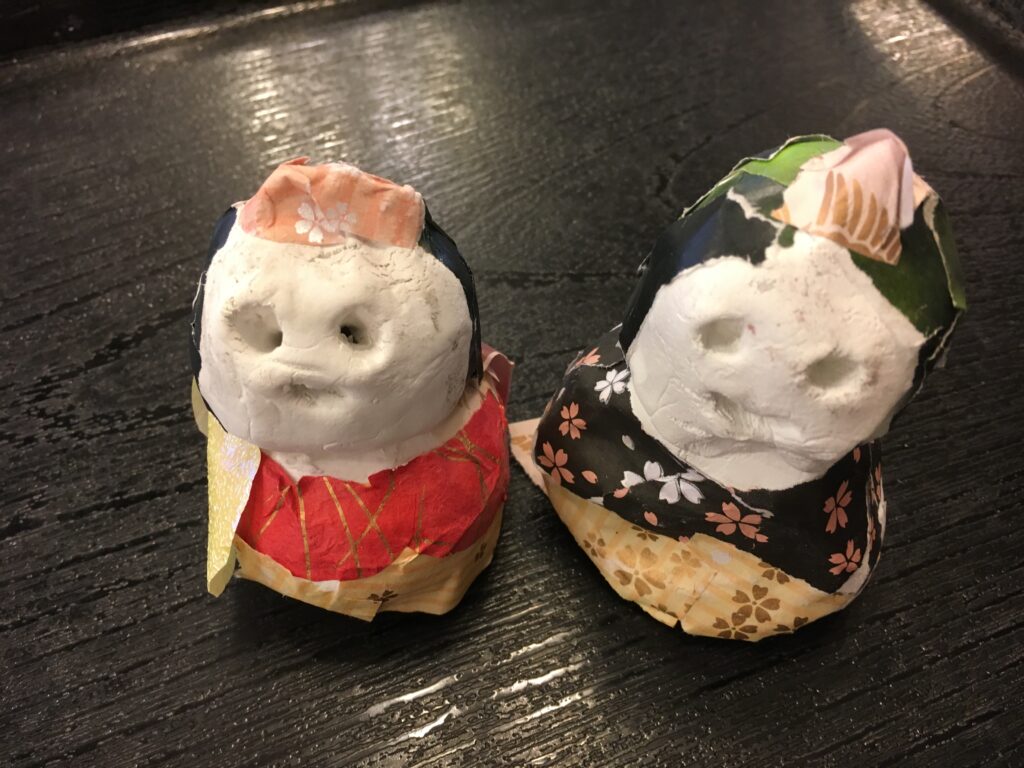
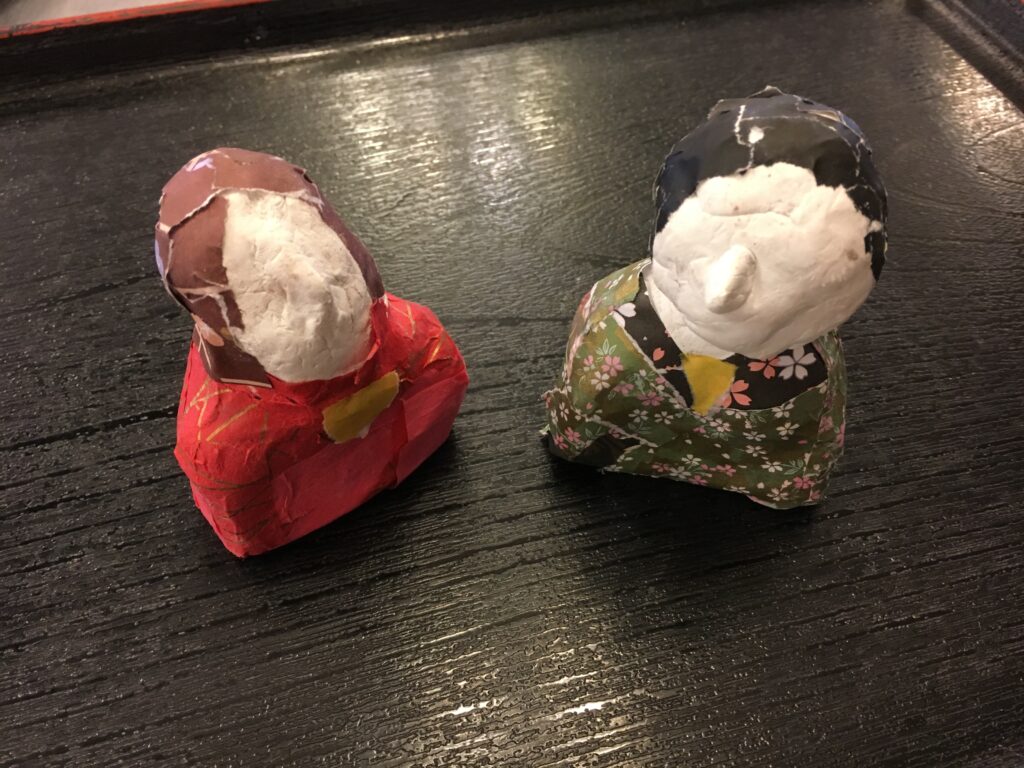
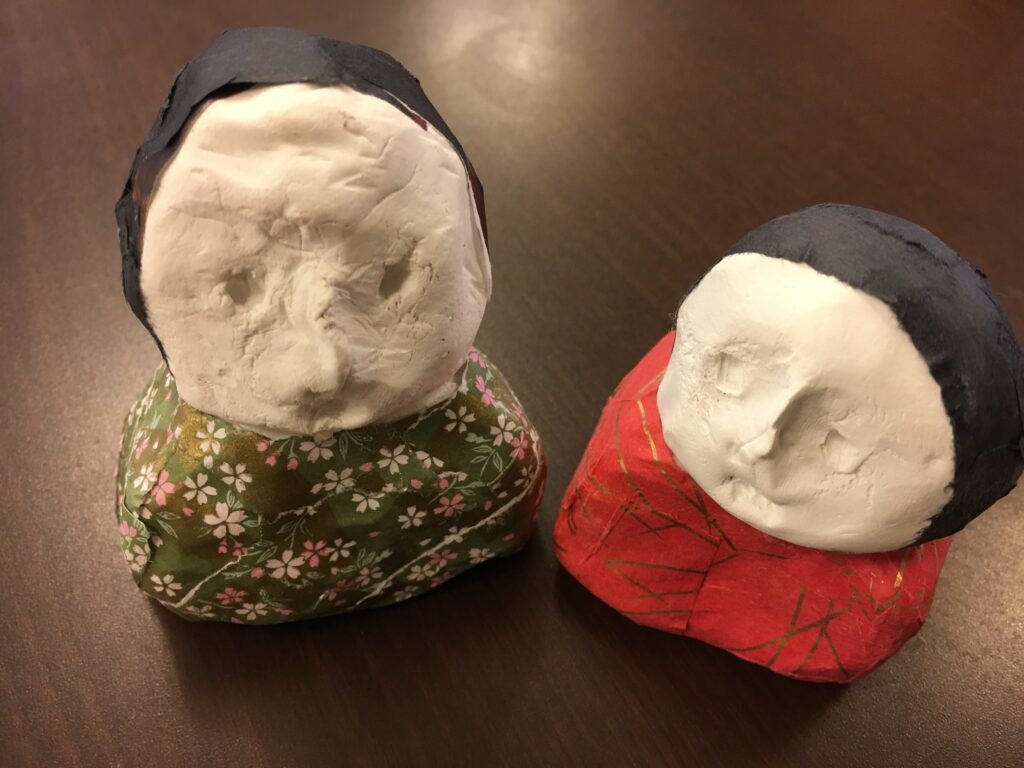
実際に制作する段階で、皆さんが困っていたのは「顔」だった。お顔の表情をどうするか、さすがに長い年月の経験から、人形の命は「顔」であることを知ってらっしゃるのだ。とうとう、目鼻を作らずに終えた方もいた。
March brings the Hina dolls, a classic and delightful tradition. I planned to have my own handmade Hina dolls ready in time for the 3rd of March. Using paper clay, I made a prototype myself to identify any tricky parts.
As the dolls would be finished with collage, I selected the paper – chiyogami would be ideal, not just for its vibrant patterns, though choice depends on individual taste.As the papier-mâché needed time to dry before the collage work, I allocated two sessions in February for the making.
When it came to the actual making, the part everyone found most challenging was the “face”. How to depict the facial expression? Indeed, from years of experience, they knew that the “face” is the soul of a doll. In the end, some finished without creating eyes or a nose.